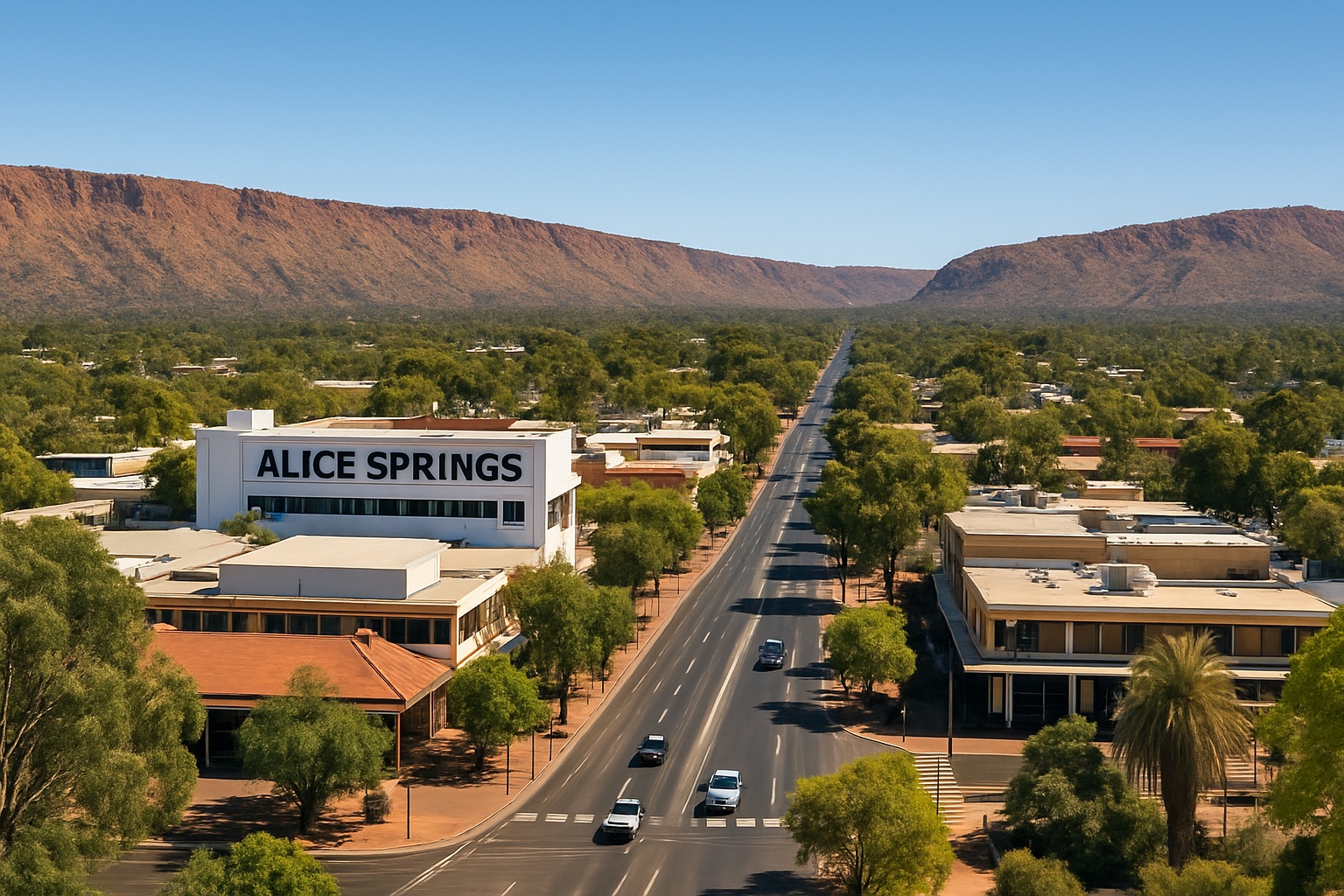
Alice Springs (NT)
Alice Springs, known as Mparntwe to its Traditional Owners, is the principal
service centre of Central Australia and one of the country’s most distinctive
inland destinations. The town sits between the East and West MacDonnell Ranges,
where the usually dry Todd River passes through a landscape of red rock, spinifex,
river red gums and wide desert skies.
The area is part of the traditional lands of the Central Arrernte people, whose
continuing cultural connections, stories and knowledge are fundamental to the
identity of Alice Springs. Aboriginal art, language and culture remain central
to the town, reflected in its galleries, cultural organisations, public places
and the communities of the wider region.
European settlement developed around the Overland Telegraph Station established
in the early 1870s. The telegraph line connected Adelaide with Darwin and the
wider world, while the later arrival of the railway strengthened the town’s role
as a transport, government and commercial hub. Historic buildings, museums and
preserved transport collections now interpret these important chapters of inland
Australian history.
Modern Alice Springs supports communities across an enormous area of the Northern
Territory. It is a centre for health, education, aviation, pastoral services,
Aboriginal organisations, arts and tourism, and a base for exploring the
MacDonnell Ranges, Larapinta Trail, desert waterholes, historic reserves and
remote settlements of the Red Centre.
Visitors can experience desert wildlife, aviation and medical history, Aboriginal
art, astronomy, walking trails and panoramic lookouts within and around the town.
ShowcasingOz TV will add original photography and professionally produced video as
its Alice Springs visit documents the people, places and experiences that give this
remarkable Central Australian community its character.
🎥 Town Documentary
Alice Springs Documentary Coming Soon
📍 Attractions
Alice Springs offers an exceptional concentration of cultural, historical,
wildlife and desert experiences that introduce visitors to the stories and
environments of Central Australia.
Explore attractions filming & feature options
-
Adelaide House Museum
A heritage building designed by Reverend John Flynn that interprets early
health care, communication and community life in Central Australia.
-
Alice Springs Desert Park (Day & Nocturnal Tour)
A major desert wildlife and cultural attraction presenting the plants,
animals and living landscapes of Central Australia through habitat exhibits
and guided experiences.
-
Alice Springs Reptile Centre
A specialist wildlife attraction featuring Central Australian reptiles,
including snakes, lizards and crocodiles, with informative presentations
and supervised encounters.
-
Alice Springs School of the Air
A visitor experience explaining how distance education connects teachers
with students living across the vast and isolated communities of Central
Australia.
-
Alice Springs Telegraph Station Historical Reserve
The site of the original overland telegraph station and early township,
with restored buildings, interpretation, walking trails and important
local history.
-
Araluen Cultural Precinct
A cultural hub bringing together galleries, museums, performing arts and
collections that explore the art, history, geology and communities of
Central Australia.
-
Boomerang Art – Aboriginal Art Gallery
A local gallery presenting Aboriginal artworks and offering visitors an
opportunity to learn more about Central Australian artistic traditions
and contemporary practice.
-
Central Australian Aviation Museum
A museum preserving aircraft, photographs and memorabilia connected with
the pioneers and services that shaped aviation across Australia’s remote
interior.
-
Earth Sanctuary Astronomy Dinner & Star Tour
A guided evening experience combining dark-sky astronomy, desert
surroundings and storytelling beneath Central Australia’s expansive
night sky.
-
Megafauna Central
An interpretive exhibition exploring the giant prehistoric animals once
found in Central Australia and the significant fossil discoveries made
at nearby Alcoota.
-
Museum of Central Australia
A natural-history collection within the Araluen Cultural Precinct
documenting the region’s geology, fossils, biodiversity and distinctive
desert environments.
-
National Road Transport Hall of Fame & Old Ghan Train Museum
A large transport heritage collection celebrating the road trains,
commercial vehicles, machinery and railway history that helped connect
remote Australia.
-
Royal Flying Doctor Service Museum
An interactive visitor centre sharing the history and continuing
importance of aeromedical care and communications across rural and
remote Australia.
-
The Kangaroo Sanctuary (Outside Only)
A wildlife sanctuary dedicated to rescuing and rehabilitating orphaned
kangaroos. Access and tour arrangements should be confirmed directly
before visiting.
-
This Is Aboriginal Art Centre
A locally based art centre and gallery showcasing Aboriginal artworks
while helping visitors engage with the artists, stories and cultural
context behind the work.
-
Yubu Napa Art Gallery
A contemporary gallery displaying Aboriginal art, sculpture and gifts,
with a focus on work connected to Central Australia and the wider desert
region.
🗺️ Points of Interest & Landmarks
These lookouts, gorges, historic sites and local landmarks show how Alice
Springs is connected with the ranges, waterways, transport routes and
communities of the wider Central Australian landscape.
Alice Springs Viewpoint from MacDonnell Ranges Image Coming Soon
Alice Springs Viewpoint from MacDonnell Ranges
This viewpoint provides sweeping vistas of Alice Springs framed by
the MacDonnell Ranges, offering a strong sense of the town’s setting
within the surrounding desert landscape.
Anzac Hill Image Coming Soon
Anzac Hill
Anzac Hill is a central lookout and memorial site in Alice Springs,
offering panoramic town views and serving as an important place of
remembrance and reflection.
Arltunga Bush Pub & Eco Retreat Image Coming Soon
Arltunga Bush Pub & Eco Retreat
Arltunga Bush Pub & Eco Retreat provides a remote outback
stopping point near the historic reserve, reflecting the character,
hospitality and rugged setting of the wider Arltunga district.
Arltunga Historical Reserve Image Coming Soon
Arltunga Historical Reserve
Arltunga Historical Reserve preserves the remains of Central
Australia’s first major European settlement, established following
the discovery of gold in the late nineteenth century. Its historic
buildings, mining sites and walking trails reveal the difficult
conditions faced by the district’s early residents.
Arltunga Open Air Museum Image Coming Soon
Arltunga Open Air Museum
Arltunga Open Air Museum brings together historic ruins, mining
relics and interpretive sites across the former settlement, allowing
visitors to explore the district’s gold-mining heritage in its
original landscape.
Cassia Hill Image Coming Soon
Cassia Hill
Cassia Hill offers panoramic views over Alice Springs and the
surrounding ranges, providing a quieter alternative for scenic
appreciation and sunset viewing.
Central Mount Stuart Historical Reserve Image Coming Soon
Central Mount Stuart Historical Reserve
Central Mount Stuart Historical Reserve marks the geographic centre
of Australia and is a site of historical significance linked to early
exploration, including the Overland Telegraph Line. The reserve
highlights the challenges faced by early explorers in traversing
Central Australia.
Clay Pans Image Coming Soon
Clay Pans
The Clay Pans are open, flat landscapes that transform dramatically
after rainfall, offering a striking example of Central Australia’s
unique desert environment.
Conlon’s Lagoon Image Coming Soon
Conlon’s Lagoon
Conlon’s Lagoon is a peaceful wetland area that attracts birdlife
and provides a contrast to the surrounding arid landscape, valued
for its tranquillity and ecological importance.
Ellery Creek Big Hole Image Coming Soon
Ellery Creek Big Hole
Ellery Creek Big Hole is one of the most recognisable natural
attractions in the West MacDonnell Ranges, featuring a deep waterhole
carved through towering quartzite cliffs. It is a popular place for
swimming, picnicking and bushwalking.
Emily Gap Image Coming Soon
Emily Gap
Emily Gap is a culturally important site featuring rock art and a
natural gap through the ranges, offering visitors insight into the
region’s Aboriginal heritage and landscape.
Ghan Pans Image Coming Soon
Ghan Pans
Ghan Pans are expansive claypan landscapes near Alice Springs, known
for their stark beauty, changing colours and significance to the
natural and cultural history of the region.
Government Works & Old Police Station Image Coming Soon
Government Works & Old Police Station
The Government Works and Old Police Station are surviving elements
of the former Arltunga settlement, illustrating how public
administration and law enforcement operated in one of Central
Australia’s earliest towns.
Great Western Mine Image Coming Soon
Great Western Mine
Great Western Mine is one of the historic mining sites associated
with the Arltunga gold rush. Surviving workings and surrounding
ruins help tell the story of early mineral exploration in Central
Australia.
Hendrick Gerrit Guth Grave Image Coming Soon
Hendrick Gerrit Guth Grave
This historic grave site marks one of Central Australia’s early
European settlers, offering insight into the hardships and history
of life in the region’s early pastoral era.
Highest Point Between Adelaide & Darwin Image Coming Soon
Highest Point Between Adelaide & Darwin
This location marks the highest elevation along the Stuart Highway
between Adelaide and Darwin. It represents a subtle but significant
geographic feature within the landscapes of Central Australia.
Ilwempe Ilwempe (Whitegums) Image Coming Soon
Ilwempe Ilwempe (Whitegums)
Ilwempe Ilwempe, also known as Whitegums, is a culturally significant
site featuring a picturesque gap and waterhole valued for its natural
beauty and Aboriginal heritage.
Jessie Gap Image Coming Soon
Jessie Gap
Jessie Gap is a scenic gorge with cultural significance, known for
its rock formations, walking paths and connection to local Aboriginal
stories and traditions.
John Flynn’s Grave Historical Reserve Image Coming Soon
John Flynn’s Grave Historical Reserve
John Flynn’s Grave Historical Reserve commemorates the Presbyterian
minister who founded the Royal Flying Doctor Service. The memorial
recognises his contribution to health care and communication across
remote Australia.
Larapinta Trail Image Coming Soon
Larapinta Trail
The Larapinta Trail is a renowned long-distance walking track
stretching across the MacDonnell Ranges, celebrated for its diverse
landscapes, cultural significance and remote beauty.
Meyers Hill & Olive Pink Botanic Garden Image Coming Soon
Meyers Hill & Olive Pink Botanic Garden
Meyers Hill offers elevated views near the Olive Pink Botanic Garden,
which showcases native Central Australian plants and highlights the
region’s distinctive desert flora.
Mount Sonder Lookout Image Coming Soon
Mount Sonder Lookout
Mount Sonder Lookout showcases views of one of the highest peaks in
the MacDonnell Ranges, renowned for its dramatic ridgelines and
sunrise and sunset scenery.
Neil Hargrave Lookout Image Coming Soon
Neil Hargrave Lookout
Neil Hargrave Lookout offers elevated views across Alice Springs and
the surrounding MacDonnell Ranges, providing a popular vantage point
for photography and scenic appreciation.
Ochre Pits Image Coming Soon
Ochre Pits
The Ochre Pits are a culturally significant site where natural
ochres have been traditionally sourced for thousands of years,
reflecting the deep Aboriginal heritage of the West MacDonnell
Ranges.
Old Arltunga Bakery & Historic Mines Walk Image Coming Soon
Old Arltunga Bakery & Historic Mines Walk
The remains of the Old Arltunga Bakery and nearby historic mines
walk offer a glimpse into daily life on the isolated goldfield and
the mining activity that led to Arltunga’s establishment.
Old Telegraph Station Cemetery Image Coming Soon
Old Telegraph Station Cemetery
The Old Telegraph Station Cemetery marks the resting place of early
settlers and workers, offering insight into the hardships of life
during Central Australia’s early colonial period.
Ormiston Pound Lookout & Gorge Image Coming Soon
Ormiston Pound Lookout & Gorge
Ormiston Pound Lookout provides sweeping views into a natural
amphitheatre of rugged ranges, while Ormiston Gorge is known for
its waterhole, walking trails and native wildlife.
Point Howard Lookout Image Coming Soon
Point Howard Lookout
Point Howard Lookout offers panoramic views across the West
MacDonnell Ranges, providing a sweeping perspective of Central
Australia’s rugged landscapes and changing desert colours.
Red Centre Farm Image Coming Soon
Red Centre Farm
Red Centre Farm is a remote working property near the Stuart Highway,
reflecting the agricultural and pastoral activity that supports
regional communities in Central Australia.
Redbank Gorge Image Coming Soon
Redbank Gorge
Redbank Gorge is a narrow and striking gorge featuring steep rock
walls and a permanent waterhole, offering a rewarding destination
for experienced swimmers and walkers.
Ryan Well Image Coming Soon
Ryan Well
Ryan Well is a historic water source associated with the Overland
Telegraph Line. It once provided a vital supply point for travellers,
stock and telegraph workers moving through Central Australia.
Serpentine Gorge Image Coming Soon
Serpentine Gorge
Serpentine Gorge is a narrow gorge known for its striking rock
formations and tranquil waterhole. The surrounding area is valued
for its scenic walks, cultural significance and quiet atmosphere.
Simpsons Gap Image Coming Soon
Simpsons Gap
Simpsons Gap is a prominent gorge featuring towering rock walls, a
waterhole and important cultural significance. It is also known for
occasional black-footed rock-wallaby sightings.
Standley Chasm Image Coming Soon
Standley Chasm
Standley Chasm is a narrow rock formation known for its dramatic
lighting effects as sunlight filters into the chasm and illuminates
its ancient rock walls.
The Gap (Traeger Park) Image Coming Soon
The Gap (Traeger Park)
The Gap is a prominent natural corridor between the East and West
MacDonnell Ranges. It has long been an important travel route and is
now a key scenic gateway to Alice Springs.
The Old Ghan Train Locomotive Image Coming Soon
The Old Ghan Train Locomotive
This preserved locomotive recalls the historic Ghan railway, which
played a vital role in opening Central Australia and shaping the
region’s transport and settlement history.
Todd Mall Image Coming Soon
Todd Mall
Todd Mall is the main pedestrian precinct in Alice Springs, featuring
local shops, galleries, cafés and public art reflecting the town’s
cultural and creative identity.
Tropic of Capricorn Line (Stuart Highway) Image Coming Soon
Tropic of Capricorn Line (Stuart Highway)
The roadside marker identifies the Tropic of Capricorn and provides
travellers with a notable geographic stopping point while crossing
Central Australia on the Stuart Highway.
Welcome to Alice Springs Sign Image Coming Soon
Welcome to Alice Springs Sign
An identifiable roadside landmark marking arrival in Alice Springs,
frequently photographed by visitors beginning or completing their
journey through Central Australia.
White Range Cemetery Image Coming Soon
White Range Cemetery
White Range Cemetery contains graves connected with the Arltunga
goldfields and provides a record of the isolation and hardship
experienced by the area’s early mining community.
🏨 Stay Where We Showcase — Alice Springs
Planning a stay in Alice Springs? Explore hotels, motels, caravan parks,
bed-and-breakfasts and chain-operated serviced apartments while discovering
the culture, history and desert landscapes of Central Australia.
ShowcasingOz TV is designed to do more than help travellers find a place to stay.
We help people discover where to go, what to experience and where to base
themselves as they explore Australia’s cities, towns and hidden gems.
View All Alice Springs Accommodation
Featured Accommodation Opportunities In And Around Alice Springs
Accommodation partners featured on ShowcasingOz TV receive premium exposure
through professionally produced video, photography and destination-led
storytelling that places their property in front of travellers actively
planning where to stay.
Explore accommodation filming & feature options
Featured Alice Springs Accommodation Coming Soon
Other Accommodation In And Around Alice Springs
A Good Rest B&B
Bed & breakfast · Alice Springs
View / Book
Alice in the Territory
Motel / hotel · Mount Johns, Alice Springs
View / Book
Alice Motor Inn
Motel · East Side, Alice Springs
View / Book
Alice Springs Tourist Park
Tourist / caravan park · Alice Springs
View / Book
Alice Village
Hotel-style accommodation · Ross, Alice Springs
View / Book
Bond Springs Outback Retreat
Bed & breakfast · Bond Springs · Approximately 22 km from Alice Springs
View / Book
Cavenagh Lodge B&B
Bed & breakfast · East Side, Alice Springs
View / Book
Crowne Plaza Alice Springs Lasseters
Hotel · Desert Springs, Alice Springs
View / Book
Desert Palms Alice Springs
Resort hotel · Desert Springs, Alice Springs
View / Book
Discovery Parks – Alice Springs
Holiday / caravan park · Arumbera, Alice Springs
View / Book
DoubleTree by Hilton Alice Springs
Hotel · Desert Springs, Alice Springs
View / Book
Elkira Court Motel
Motel · Alice Springs town centre
View / Book
G’Day Mate Tourist Park
Tourist / caravan park · Arumbera, Alice Springs
View / Book
greet Hotel Alice Springs
Hotel · Alice Springs town centre
View / Book
Heritage Caravan Park
Caravan park · Arumbera, Alice Springs
View / Book
Kathys Place Bed and Breakfast
Bed & breakfast · East Side, Alice Springs
View / Book
Mantra Alice Springs
Hotel · Alice Springs town centre
View / Book
Mercure Alice Springs Resort
Resort hotel · Alice Springs
View / Book
Munga Munga B&B
Bed & breakfast · Ilparpa Valley, Alice Springs
View / Book
Ooraminna Homestead
Bed & breakfast · South of Alice Springs · Within 50 km
View / Book
Quest Alice Springs
Chain-operated serviced apartments · Alice Springs
View / Book
Todd Tavern
Hotel · Alice Springs town centre
View / Book
Wanngardi Caravan Park
Caravan park · White Gums · Approximately 15 km from Alice Springs
View / Book
White Gum Motel
Motel · The Gap, Alice Springs
View / Book
Wilmots on Dixon
Bed & breakfast · Braitling, Alice Springs
View / Book
Wintersun Cabin & Caravan Park
Cabin / caravan park · Braitling, Alice Springs
View / Book
This list is provided for visitor awareness only. Inclusion does not imply
partnership or endorsement. Booking buttons open Booking.com search results
and availability may vary. Some links on this page are affiliate links,
which means we may earn a small commission if you make a booking, at no
extra cost to you.